
FOUNDATION YEAR 2024
Sustainable Regional Development Scientific Journal
Albanian Association of Regional Scientists
FOUNDATION YEAR 2024
Sustainable Regional Development Scientific Journal
Albanian Association of Regional Scientists
Professor Peter Wilkinson Howitt

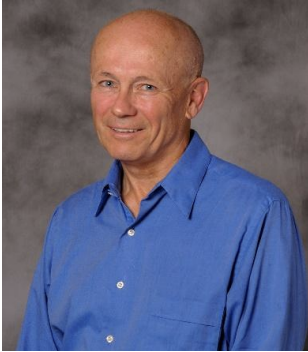
Professor Peter Wilkinson Howitt
| 2025, Nobel Prize for Economics with Philippe Aghion “for the theory of sustained growth
through creative destruction,”
Is a Canadian economist known for his theoretical work on innovation, technological change, and long-term
economic
growth. In 2025 he shared half of the Nobel Prize for Economics with Philippe Aghion “for the theory of
sustained
growth through creative destruction,” a framework describing how new technologies and companies replace older
ones,
driving sustained development. The other half of the prize was awarded to the economic historian Joel Mokyr for
complementary work on the historical roots of innovation and industrialization.
Early life and education
Howitt received a bachelor’s degree from McGill University in Montreal in 1968 and a master’s in economics from
the University of Western Ontario the following year. His doctoral studies in macroeconomic theory provided the
foundation for his later research on innovation and economic growth.
Academic and professional career
While completing a Ph.D., Howitt joined the faculty of the University of Western Ontario, where he taught from
1972
to 1996. He then served on the economics faculty at Ohio State University from 1996 to 2000 before joining Brown
University. At Brown he was the Charles Pitts Robinson and John Palmer Barstow Professor of Economics and later
became a professor emeritus. He is affiliated with the National Bureau of Economic Research and the American
Economic Association.
Major contributions and research
Along with Philippe Aghion, Howitt developed the Schumpeterian model of how innovation evolves within an
economy, first published in their 1992 Econometrica article, “A Model of Growth Through Creative Destruction.”
The
framework linked technological progress to measurable patterns of productivity growth and influenced subsequent
research on the concept, known as endogenous growth, or economic growth driven by forces within the economy
itself.
Their work formalized Joseph Schumpeter’s idea of creative destruction, the process by which new companies and
technologies replace older ones as a central mechanism of innovation and economic expansion.
The model that Howitt helped develop has since been extended to study macroeconomic fluctuations, unemployment,
and policy design for innovation-based economies. His own research explored how factors such as education,
finance,
and competition influence a nation’s capacity to generate and sustain technological progres
Academic Profile by:
Professor Assistant Filipos Ruxho, Sustainable Regional Development
Scientific Journal
References
https://www.nobelprize.org/prizes/economic-sciences/2025/howitt/facts/